Funded Research Projects

Collaborative research programmes in assistive robotics and connected health

A growing collection of funded projects, with links to project pages, collaborators and public outputs.

Project portfolio

Funded projects

EMERGENCE healthcare robotics network project thumbnail

Funded project

EMERGENCE: Healthcare Robotics for Frailty in the Community

Funder: EPSRC Healthcare Technologies Network+

EMERGENCE was an EPSRC Healthcare Technologies Network+ project focused on building a sustainable ecosystem that connected researchers, industry, healthcare providers, service users, regulators and policy makers. Its aim was to support the development and adoption of robotic technologies that can help people living with frailty in community settings.

  • Supporting world-class healthcare robotics research and development for people living with frailty in UK communities.
  • Connecting researchers, industry and healthcare providers to strengthen the infrastructure needed for translation and adoption.
  • Using living lab test beds and funded feasibility studies to support co-designed, high-quality research.
  • Contributing guidance and resources through the EMERGENCE Body of Knowledge, including the White Paper on Robotics in Health and Social Care.

NIHR HealthTech Research Centre in Rehabilitation project thumbnail

Funded project

NIHR HealthTech Research Centre in Rehabilitation

Funder: National Institute for Health and Care Research (NIHR) · £2.8 million over five years from 2024

The NIHR HealthTech Research Centre in Rehabilitation brings together NHS experts, universities, industry, charities, patients and the public to develop technologies that support rehabilitation after life-changing injury, trauma and illness. Hosted by Nottingham University Hospitals NHS Trust and closely linked with the National Rehabilitation Centre, the centre supports the development and translation of rehabilitation technologies across clinical and community settings.

Praminda Caleb-Solly is Co-Theme Lead for the Technology Theme: Enable Participation, which focuses on technologies that help people start, access and sustain rehabilitation. This includes assistive robotics and connected technologies that can support daily function, independence and participation at home and in wider care environments.

  • Supports the development of rehabilitation technologies for people recovering from injury, trauma and illness.
  • Connects NHS, university, industry, charity, patient and public contributors to accelerate health technology innovation.
  • Works closely with the National Rehabilitation Centre to support technology-led rehabilitation research and translation.
  • Explores how assistive robotics, intelligent sensing and connected technologies can help people participate more fully in rehabilitation and daily life.
Future-Proofing Care project thumbnail

Funded project

Future-Proofing Care: Policy and Skills for Assistive Robotic Healthcare Technologies

Project lead: Professor Praminda Caleb-Solly, University of Nottingham · Policy partner: Policy Connect

Future-Proofing Care explores how the UK can accelerate the real-world adoption of intelligent assistive robotic healthcare technologies. The project focuses on the policy, skills, regulatory, procurement and workforce conditions needed to move assistive and rehabilitation robotics out of laboratories and into sustainable use across health and social care.

Building on the EMERGENCE EPSRC Healthcare Technologies Network+ findings and roadmap, the project uses policy engagement and participatory research to identify barriers to adoption and generate evidence for policymakers, care providers, regulators and technology developers.

  • Investigates barriers to adoption of intelligent assistive robotic healthcare technologies in the UK.
  • Focuses on policy, regulation, procurement, funding, governance, workforce skills and care-system readiness.
  • Explores how assurance of safety, efficacy and trustworthiness can support responsible deployment of adaptive robotic systems.
  • Builds on EMERGENCE findings to support translation of assistive and rehabilitation robotics into real-world health and social care settings.
  • Includes policy engagement workshops with experts from health, social care, robotics, regulation and related disciplines.
LEND Lived Experience Narratives in Dementia project thumbnail

Funded project

LEND: Lived Experience Narratives in Dementia

Funder: National Institute for Health and Care Research (NIHR) · Award NIHR206255

LEND is developing and evaluating a dementia-specific narrative-based intervention to improve quality of life for people living with dementia and their care partners. The project is collecting diverse first-person stories from people affected by dementia and developing an online resource to help people find narratives that are meaningful, supportive and relevant to their own circumstances.

Praminda Caleb-Solly is co-leading the work package on the design and development of the LEND intervention, contributing expertise in accessible, safe and inclusive digital health technologies.

  • Develops an online intervention using lived-experience narratives from people with dementia and carers.
  • Works with a Lived Experience Advisory Panel (LEAP) to ensure the intervention is shaped by people directly affected by dementia.
  • Addresses the need for more diverse and inclusive dementia stories, including narratives from people from ethnic minority communities, LGBTQIA+ communities, people with rarer dementias, and people with young-onset dementia.
  • Focuses on safe, accessible ways for users to discover helpful stories in text, audio or video formats.
  • Includes evaluation of the intervention for people living with Dementia.
Trailblazers Training Together project thumbnail

Funded project

Trailblazers Training Together

Funder: Ageing Well Service Development Fund / BNSSG Clinical Commissioning Group

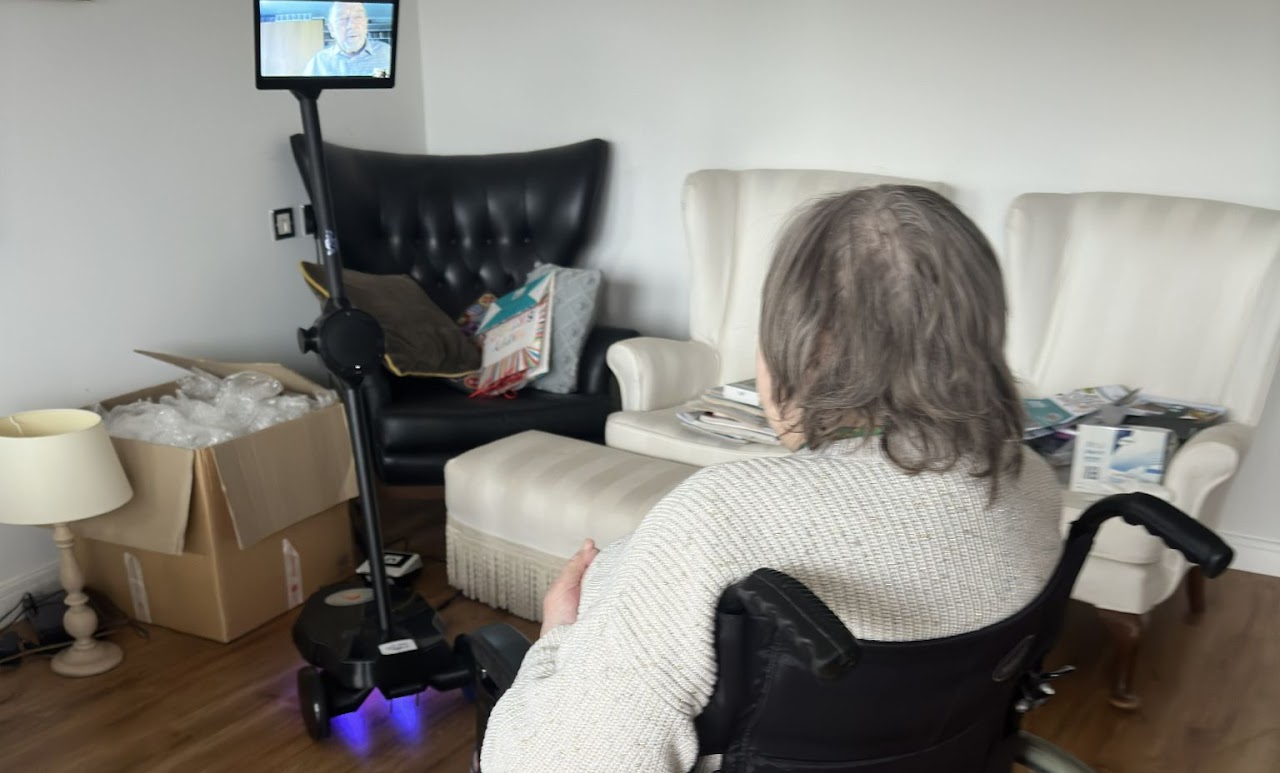
A project exploring how telepresence robots and digital prompting can help volunteers support older people at home, encouraging social interaction and physical activity without requiring intensive in-person training.

  • Uses telepresence robots to enable remote volunteer support in people's homes.
  • Explores social connection, physical activity support and reduced digital exclusion.
  • Delivered with partners including Age UK Bristol, Fitness for Life, Bristol Health Partners, Robotics for Good CIC and University of Nottingham evaluation input.
METRICS project logo

Funded project

METRICS: Metrological Evaluation and Testing of Robots in International Competitions

Funder: European Union Horizon 2020 research and innovation programme · Grant agreement No. 871252

METRICS developed reproducible and objective approaches for evaluating robots through international benchmarking competitions. The project organised competitions across four priority areas: healthcare, agri-food, inspection and maintenance, and agile production.

Within METRICS, Praminda Caleb-Solly co-led the healthcare workstream, HEART-MET, which focused on benchmarking physically assistive robots in realistic healthcare and domestic support scenarios.

  • Co-led the healthcare workstream focused on assistive robotics evaluation and benchmarking.
  • Contributed to HEART-MET, a healthcare robotics challenge evaluating robot capabilities for socially acceptable item delivery and assistive interaction.
  • Supported development of objective, reproducible testing methods for robots operating outside controlled laboratory conditions.
  • Produced research on trustworthy robot benchmarking and the role of competitions in supporting evaluation, adoption and trust.